

Table of Contents
ToggleWhat is Beard Hair Transplant?
A robust, well-defined beard is a hallmark of masculinity and confidence, but only some are blessed with the ability to grow one naturally. Eugenix Hair Sciences provides a cutting-edge solution for those facing genetic challenges or other inhibiting factors: beard hair transplants.
Facial hair is associated with looks and masculinity. Losing facial hair or being unable to grow it in teenagers leads to a dent in confidence and is also sometimes associated with manhood.
It is better to understand the anatomy of a beard transplant before you decide to undergo it. The beard formation begins during puberty and it continues to grow and develop till the mid-thirties. For beard transplant, the face is divided into two sections – Frontal and Lateral. The lateral part will involve the sideburns, the jawline and the cheeks. While the frontal part includes the goatee and the mustache involving the chin and lower part of the jawline.
The doctor who performs the hair transplant keeps in mind that the hair density in the mustache and beard is usually different. The number of grafts needed also differ from person to person. However, usually, on average, 2000 to 2500 grafts are needed.
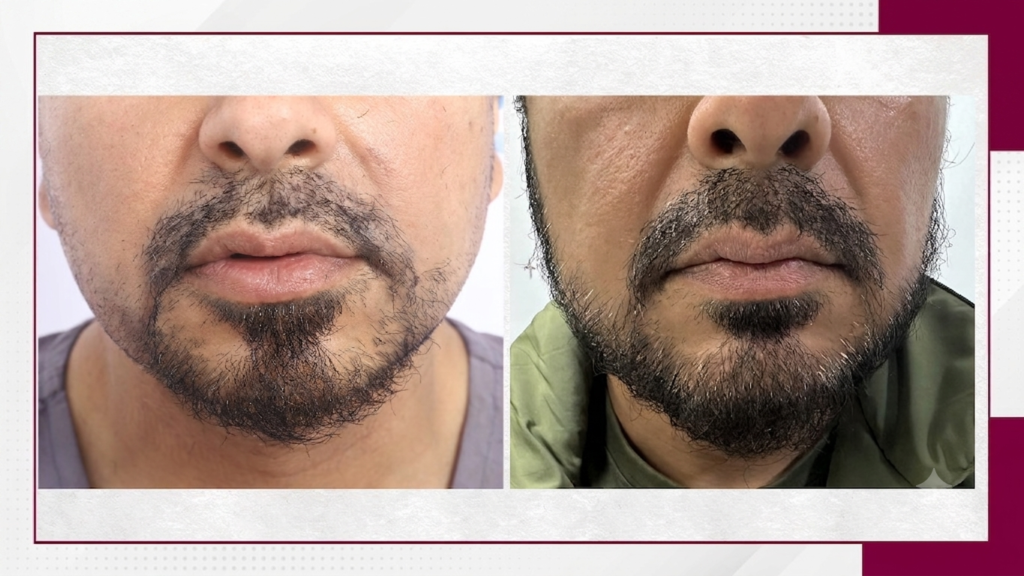
Before & After Images
‘Transforming Looks, Follicle by Follicle’.
Witness the astonishing results from our revolutionary Direct Hair Transplant (DHT) technique.
With our state-of-the-art infrastructure, instruments and processes, we ensure you are in the right place and in the right hands. The results speak for themselves. Take a look!
Who are the Ideal Candidates for Beard Hair Transplant?
There are a few requirements that need to be fulfilled for a person to be a good candidate for a beard transplant. The person should be in sound mental and medical health. The decision for undergoing a beard transplant should be genuine and not because of any societal pressures. There should be an above-average donor area that involves the side and the back of the head. Moreover, a thorough physical examination is to be done by an experienced doctor to evaluate whether a person is an ideal candidate for the surgical procedure or not.
People who suffer from the following conditions opt for Facial Hair Transplant:
- Scars because of any burn, trauma and surgical procedure.
- Traction alopecia that may have led to hair loss.
- Other medical conditions such as cancer or infections.
- Persistent conditions such as Alopecia Areata.
- Scarring due to conditions such as folliculitis.
- Hair loss because of any earlier transplant surgery.
- Less density of beard and mustaches.
The ideal candidates for a beard transplant are those in good health, with a stable hair loss condition and a sufficient donor area. Eugenix Hair Sciences conducts a thorough evaluation to ensure that each individual’s treatment plan is personalised and effective
Benefits of Having Beard Hair Transplant
Eugenix employs the Follicular Unit Extraction (FUE) method for beard transplants. This technique involves individual follicle extraction and careful implantation, which allows for natural-looking results and minimal scarring.
- Avoidance of a linear scar.
- Faster healing time.
- The technique of choice in decreased scalp laxity.
How is Beard Hair Transplant Procedure Performed?
First of all the donor area of the head and face will be examined. Then the design of the beard will be decided. The doctor will discuss the design and the density of the beard that the patient is looking for. This discussion will be done in detail and the final plan will be made according to your acceptance.
You may be told to undergo some blood tests and physical checks so as to ensure that your health is good.
Post-operative care is crucial for the best outcomes. Eugenix provides comprehensive guidance on how to care for the transplanted area to ensure successful results and satisfaction with newly enhanced beard.
- Extraction of the required follicular units or follicles from the donor area and placement in holding solution.
- Implantation of the grafts in the recipient area with the help of implanters or forceps.
Key Tips to Remember Before Opting for a Beard Hair Transplant Procedure
Before opting for a beard hair transplant procedure, consider the following key tips:
1. Research: Take the time to research different clinics and surgeons specializing in beard hair transplants. Look for experienced professionals with a track record of successful procedures and positive patient testimonials.
2. Consultation: Schedule a consultation with a qualified surgeon to discuss your goals, expectations, and candidacy for the procedure. The surgeon will assess your beard growth pattern, hair quality, and overall health to determine if you’re a suitable candidate for a beard transplant.
3. Realistic expectations: Have realistic expectations about the results of the procedure. Understand that a beard transplant may not always achieve your desired outcome or perfect symmetry. The density and coverage of the transplanted hair will depend on factors such as donor hair availability and your individual characteristics.
4. Risks and complications: Educate yourself about the potential risks and complications associated with beard transplant surgery, such as infection, scarring, and uneven growth. Discuss these concerns with your surgeon and ensure you understand the possible outcomes before proceeding with the procedure.
5. Pre-operative preparations: Follow your surgeon’s pre-operative instructions carefully to prepare for the procedure. This may include avoiding certain medications, quitting smoking, and following a healthy diet to optimize healing and minimize complications.
6. Post-operative care: Be prepared to follow post-operative care instructions provided by your surgeon. This may include avoiding strenuous activities, keeping the transplant area clean and dry, and taking prescribed medications to prevent infection and promote healing.
7. Patience: Understand that the results of a beard transplant take time to fully manifest. It may take several months for the transplanted hair to grow and blend seamlessly with your existing beard. Be patient and trust the healing process.
8. Maintenance: Remember that maintaining your transplanted beard requires ongoing care and grooming. Follow a regular skincare and grooming routine to keep your beard healthy and well-maintained.
By keeping these key tips in mind, you can make an informed decision about whether a beard hair transplant procedure is right for you and ensure a successful outcome.